WaveTalkers LIVE: Episode 109
Hurricane Exercise Participation
Live Streamed: June 16, 2024
In Episode 109 of WaveTalkers LIVE, we delve into the experience of participating in a large scale online exercise, highlighting key strategies for effective emergency communications, including interoperability, detailed planning, robust training, and strong coordination with served agencies to enhance preparedness and response capabilities in real-world scenarios.
Links
- Eastern Heath Preparedness Coallition
- 2024 EHPC HURRICANE COMMUNICATION AND INFORMATION SHARING EXERCISE
- Exercise MSEL (Task List)
Episode 109 Summary: Hurricane Exercise
In Episode 109 of WaveTalkers LIVE, we focused on the intricacies of participating in a hurricane exercise, emphasizing the concepts and strategies necessary for effective emergency communications. Hosted by Chris Matia (W6AH) and joined by David (W0DHG), Dan (NR6V), and Scott (KM6RFB), the episode covered a broad range of topics designed to enhance preparedness and interoperability among emergency communicators.
Key Concepts Covered:
Interoperability in Emergency Communications:
- Highlighted the importance of seamless communication between various agencies and organizations during an emergency.
- Discussed how to establish and maintain interoperability through planning, coordination, and standardized procedures.
Developing and Utilizing Communication Plans:
- Explained the creation and use of ICS 205 (Incident Communications Plan) to outline all communication methods and frequencies.
- Stressed the need for detailed PACE plans (Primary, Alternate, Contingency, Emergency) for different aspects of operations, ensuring redundancy and reliability.
Effective Use of ICS Forms:
- Demonstrated the significance of maintaining accurate and up-to-date logs using ICS forms such as ICS 214 (Activity Log) and ICS 309 (Communications Log).
- Highlighted how these forms facilitate better tracking and accountability during an incident.
Integration of Different Communication Technologies:
- Covered the use of various communication methods, including digital mobile radio (DMR), voice traffic on local repeaters, and Winlink for digital messaging.
- Emphasized the importance of having backup systems and alternate methods of communication to ensure continuous operations.
Coordination with Served Agencies:
- Discussed the importance of building strong relationships with served agencies, understanding their communication capabilities, and integrating them into your plans.
- Highlighted the need for agreements and memorandums of understanding (MOUs) with local repeater owners and other communication resources.
Scenario-Based Training and Exercises:
- Detailed the value of participating in scenario-based exercises to simulate real-world conditions and test plans, procedures, and equipment.
- Encouraged the incorporation of various injects and tasks to challenge participants and enhance problem-solving skills.
Accountability and Documentation:
- Stressed the necessity of personal accountability for all participants during an exercise or actual incident.
- Highlighted the importance of thorough documentation and reporting to provide a clear record of actions taken and facilitate after-action reviews.
Task Review
Task 1: Listen to the Briefing
Understanding the exercise overview and instructions is crucial for effective participation. This task involved listening to the initial briefing to understand the objectives, timeline, and specific requirements of the exercise. The briefing set the stage for all subsequent tasks and provided essential context.
Task 2: Start an ICS 214 Form
Maintaining an activity log for accurate tracking of tasks and actions. We demonstrated how to use Winlink to create an ICS 214 form, which is essential for documenting all significant activities and decisions made during the exercise. This ensures accountability and provides a record for after-action reviews.
Relevant Episodes:
- Episode 16 - Up & Running with Winlink
- Episode 63 - Radio Interfaces for VARA
- Episode 20 - Winlink Digipeating
- Episode 17 - Winlink with VARA HF
- Episode 53 - Winlink with VARA FM
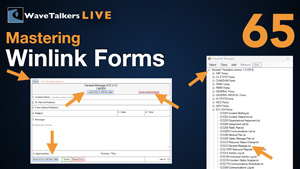
- Episode 65 - Mastering Winlink Forms
Task 3: Create an ICS 205 Form
Developing a communications plan that outlines frequencies and methods for all participants. This task included a detailed walkthrough of creating an ICS 205 form in Winlink, specifying the frequencies and communication methods to be used during the exercise. This ensures all participants are on the same page and can communicate effectively.
Relevant Episode: Episode 65 - Mastering Winlink Forms
Task 4: Develop a PACE Plan
Creating Primary, Alternate, Contingency, and Emergency communication plans to ensure redundancy and reliability. We discussed the importance of having multiple layers of communication options and demonstrated how to document these plans using Winlink forms.
Relevant Episode: Episode 104 - Tactical Winlink Gateway
Task 5: Establish Tactical Nets
Using Simplex or designated frequencies for localized tactical communication to avoid overloading repeaters. We showed how to set up and manage tactical nets using both voice and digital modes, ensuring effective communication within a localized area.
Relevant Episode: Episode 1.5 - Digital and Voice Tactical Nets
Task 6: Send Winlink Attachments
Attaching and sending images or documents via Winlink, ensuring file sizes are manageable for RF transmission. This task involved a practical demonstration of attaching and sending files in Winlink, addressing common issues like file size limitations and ensuring successful transmission.
Relevant Episode: Episode 28 - Sending Winlink Attachments
Task 7: Hospital Infrastructure Report
Reporting on the status of hospital infrastructure, including contact information and location. We demonstrated how to fill out and send the Hospital Infrastructure Report form using Winlink, providing critical information about hospital capabilities and readiness.
Relevant Episode: Episode 65 - Mastering Winlink Forms
Task 8: Participate in or Start a Net
Establishing or joining communication nets for effective coordination during an incident. We discussed the procedures for starting and participating in nets, including the importance of net control and proper net protocols.
Relevant Episode: Episode 81 - Best Practices for EmComm Nets
Task 9: Complete Inject Tasks
Following a series of injects to simulate real-world conditions and test problem-solving skills. This task required participants to handle unexpected challenges and adapt their responses, demonstrating the flexibility and problem-solving required in real incidents.
Relevant Episode: Episode 103 - Winlink Catalog Requests
Task 10: Test PACE Plan
Validating the effectiveness of PACE plans under simulated conditions. We demonstrated how to test each component of a PACE plan, ensuring that primary, alternate, contingency, and emergency communication methods are functional and reliable.
Relevant Episode: Episode 80 - Creating a Local Emergency Operations Playbook
Task 11: Pass Voice Traffic
Using voice communication to relay messages and ensure information is shared accurately. This task involved a live demonstration of passing voice traffic over different frequencies, highlighting the importance of clear and concise communication.
Relevant Episode: Episode 81 - Best Practices for EmComm Nets
Task 12: Simulate Power Outage
Testing alternate power sources and ensuring continuous operation during a power outage. We explored various power solutions, including batteries, generators, and solar panels, and demonstrated how to switch between power sources seamlessly.
Relevant Episode: Episode 74 - Choosing the BEST Field Day Power
Task 13: Conduct Station Health Check
Checking equipment status, antenna tuning, and overall station health to ensure readiness. We provided a step-by-step guide on how to conduct a thorough station health check, including checking SWR, power output, and ensuring all equipment is operational.
Relevant Episode: Episode 47 - Antenna Tuning
Task 14: Communicate via DMR
Using Digital Mobile Radio for communication and understanding its role in emergency operations. We covered the basics of DMR, including programming radios and using talk groups to maintain communication during an emergency.
Relevant Episode: Episode 80 - Creating a Local Emergency Operations Playbook
Task 15: GPS Coordinate Conversion
Converting and verifying GPS coordinates to ensure accurate location reporting. We demonstrated how to use online tools to convert GPS coordinates between different formats and discussed the importance of accurate location data in emergency communications.
Relevant Episode: Episode 10 - Position Reporting
Task 16: Use Tactical Channels (VHF/UHF)
Utilizing interoperable tactical channels for coordination between different agencies. We explained how to find and use national interoperable frequencies, and discussed the importance of having pre-established agreements for their use.
Relevant Episode: Episode 102 - Interoperability: A Community Approach
Task 17: Pass Traffic on Local Repeaters
Using local repeaters for communication and understanding repeater use agreements. This task involved demonstrating how to use repeaters effectively and the importance of having agreements with repeater owners for emergency use.
Sample Repeater Use Agreement: 2024 PCARES Sample
Relevant Episode: Episode 81 - Best Practices for EmComm Nets
Task 18: Request Local Weather Forecast
Accessing and utilizing local weather information to inform decision-making. We showed how to request and interpret local weather forecasts using Winlink, ensuring that participants have up-to-date weather information during an incident.
Relevant Episode: Episode 103 - Winlink Catalog Requests
Task 19: Document Relationships and Plans
Building and maintaining strong relationships with served agencies and understanding their communication plans. We discussed the importance of establishing and documenting relationships with served agencies, and demonstrated how to include this information in your emergency communications plans.
Relevant Episode: Episode 80 - Creating a Local Emergency Operations Playbook
Task 20: Support PSAP (911 Centers)
Coordinating with public safety answering points and understanding their role in emergency response. We highlighted the importance of supporting PSAPs, including how to integrate their communication needs into your plans.
Relevant Episode: Episode 80 - Creating a Local Emergency Operations Playbook
Task 21: Personal Accountability
Ensuring all participants are accounted for and maintaining accurate check-in/check-out logs. We demonstrated the use of various ICS forms to track participant accountability, emphasizing the importance of knowing who is on-site and their status.
Relevant Episode: Episode 65 - Mastering Winlink Forms
Task 22: Submit Final Documentation
Compiling and submitting all required documentation, including ICS 214 and ICS 309 forms. We provided a detailed walkthrough of generating and submitting final reports using Winlink, ensuring that all exercise activities are well-documented and reviewed.
Relevant Episode: Episode 65 - Mastering Winlink Forms
Conclusion
The episode provided a comprehensive overview of the key principles for effective emergency communications, focusing on interoperability, detailed planning, robust training, and strong coordination with served agencies. By adopting these strategies, amateur radio operators and emergency communicators can significantly improve their preparedness and response capabilities in real-world scenarios.
Previous Episodes










Become a WaveTalkers Supporter